
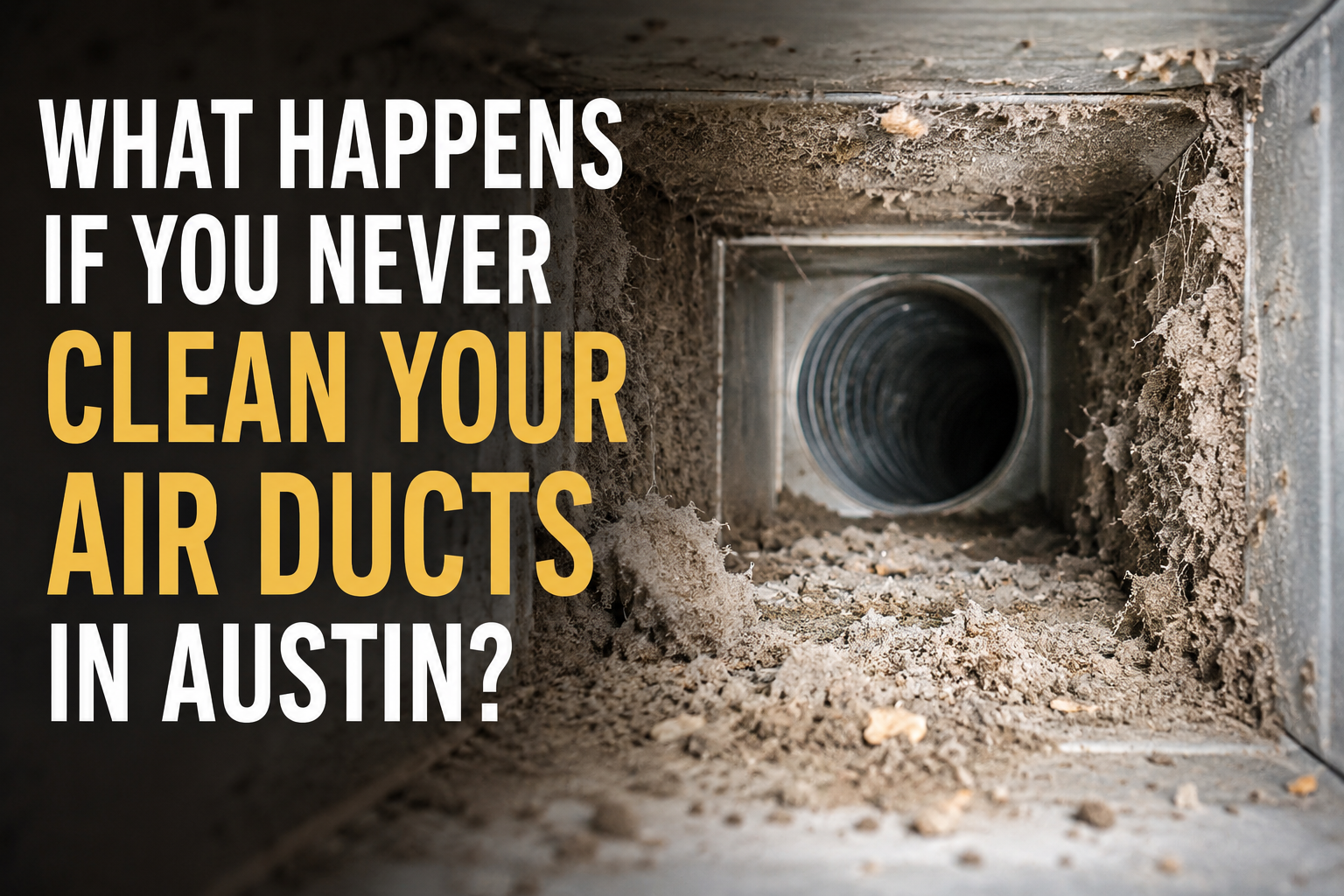
If you never clean your air ducts in Austin, dust, allergens, pet dander, mold spores, and debris can accumulate inside your HVAC system. Over time, this buildup can reduce indoor air quality, increase energy bills, strain your heating and cooling equipment, and contribute to respiratory discomfort. Austin’s long allergy seasons and humid conditions can make neglected ductwork even more problematic, leading to unhealthy air circulation throughout your home.
Your Air Ducts Work Harder Than You Think
Most homeowners rarely think about their air ducts. They are hidden behind walls, ceilings, and floors, quietly delivering heated and cooled air throughout the home. Because they are out of sight, many people assume they do not require maintenance.
The reality is quite different.
Every day, your HVAC system pulls in air containing dust, pollen, pet hair, microscopic debris, and other contaminants. A portion of these particles becomes trapped within your ductwork. As months turn into years, the buildup grows thicker and begins affecting both your home’s air quality and your HVAC system’s efficiency.
For homeowners in Austin, where seasonal allergens remain active for much of the year, neglected air ducts can become a significant source of indoor pollution.
Austin’s Climate Creates Unique Air Duct Challenges
Austin residents deal with environmental factors that make routine duct maintenance especially important.
Cedar pollen, oak pollen, grass pollen, dust, construction debris, and fluctuating humidity levels all contribute to airborne particles entering HVAC systems. During peak allergy seasons, many homeowners focus on changing filters while overlooking the ductwork distributing air throughout the home.
If contaminants remain inside the ducts, every HVAC cycle can recirculate those particles back into your living spaces.
This is one reason many homeowners choose professional air duct cleaning services in Austin to help maintain healthier indoor environments.
Indoor Air Quality Can Decline Significantly
One of the most noticeable consequences of dirty air ducts is reduced indoor air quality.
As contaminants accumulate, they can become airborne whenever your HVAC system operates. Family members may begin noticing:
- Increased sneezing
- More frequent allergy symptoms
- Persistent coughing
- Nasal irritation
- Eye irritation
- Excessive dust around the home
While air ducts are not always the sole cause of indoor air quality issues, contaminated ductwork can contribute significantly.
Homeowners concerned about airborne pollutants often combine duct cleaning with professional indoor air quality testing in Austin to identify specific contaminants affecting their homes.
Your Energy Bills May Continue Rising
Dirty air ducts do more than affect air quality.
When airflow becomes restricted by dust and debris, your HVAC system must work harder to maintain comfortable temperatures. This additional strain often results in:
- Longer HVAC run times
- Increased energy consumption
- Reduced system efficiency
- Higher monthly utility costs
Many homeowners assume rising energy bills are simply due to Austin’s hot summers. However, restricted airflow can quietly contribute to unnecessary energy waste throughout the year.
HVAC Components Experience More Wear and Tear
Your heating and cooling equipment depends on proper airflow.
When ductwork becomes clogged with debris, the HVAC system can experience additional stress. Motors, blowers, coils, and other components may need to work harder to move air through the system.
Over time, this can contribute to:
- More frequent repairs
- Reduced system performance
- Shorter equipment lifespan
- Increased maintenance expenses
Routine maintenance and duct cleaning help support overall HVAC performance and may reduce unnecessary strain on expensive equipment.
Dust Returns Faster After Cleaning
Have you ever dusted your furniture only to see dust return within a day or two?
Dirty ductwork may be part of the problem.
When dust accumulates inside ducts, airflow can distribute fine particles throughout the home repeatedly. Homeowners often notice:
- Dust collecting on furniture quickly
- Dust buildup around vents
- Frequent cleaning requirements
- Dust settling on electronics and surfaces
While household dust comes from multiple sources, contaminated duct systems can contribute to the cycle.
Mold Growth Becomes More Likely
Austin’s humidity can create conditions that support moisture accumulation within HVAC systems.
If moisture combines with dust and organic material inside ductwork, mold growth may become possible. Once mold develops, spores can circulate through the home’s ventilation system.
Potential warning signs include:
- Musty odors
- Unexplained allergy symptoms
- Visible mold near vents
- Persistent indoor air quality concerns
Professional inspections can help determine whether mold is present and identify appropriate remediation steps.
Unpleasant Odors Can Spread Throughout Your Home
Air ducts can trap more than dust.
Pet odors, cooking odors, smoke residue, moisture-related smells, and other contaminants may accumulate inside the system over time.
As your HVAC system operates, these odors can circulate throughout the home, making it difficult to eliminate unwanted smells completely.
Many homeowners are surprised to discover that persistent indoor odors originate from ductwork rather than carpets, furniture, or walls.
For additional home air quality improvements, some homeowners also explore UV light installation services in Austin as part of a broader indoor air quality strategy.
Pest Activity Can Go Undetected
Air ducts occasionally become attractive spaces for insects and small rodents.
If pests enter the duct system, they may leave behind nesting materials, droppings, and debris that affect both air quality and system cleanliness.
Regular inspections can help identify these issues before they become more serious problems.
How Often Should Austin Homeowners Clean Their Air Ducts?
The ideal cleaning schedule depends on several factors, including:
- Presence of pets
- Household allergies
- Recent remodeling projects
- Occupancy levels
- Local environmental conditions
The U.S. Environmental Protection Agency recommends cleaning ducts when substantial visible contamination is present rather than on a strict schedule for every home. Homeowners can learn more from the EPA’s guidance on duct cleaning.
Many Austin homeowners choose inspections every few years to determine whether professional cleaning is warranted.
Signs Your Air Ducts May Need Attention
Several warning signs may indicate it’s time for a professional evaluation:
- Excessive dust buildup
- Persistent allergy symptoms indoors
- Musty odors from vents
- Visible debris around registers
- Uneven airflow between rooms
- Recent home renovations
- Rising utility bills without explanation
If multiple signs are present, a professional inspection can help determine the condition of your duct system. For a deeper understanding of warning signs and benefits, read our guide on why you need air duct cleaning in Austin.
Protect Your Home’s Air Before Problems Grow
Air ducts are one of the most overlooked parts of a home’s HVAC system, yet they play a major role in comfort, efficiency, and indoor air quality. Ignoring duct maintenance for years can contribute to dust buildup, higher energy costs, unpleasant odors, reduced HVAC performance, and potential air quality concerns.
For Austin homeowners, staying proactive can help create a cleaner, healthier, and more comfortable living environment throughout the year.
Schedule Professional Air Duct Cleaning in Austin
If you’re noticing excessive dust, allergy symptoms, musty odors, or declining HVAC performance, the team at Andrew & Sons can help. Our experienced technicians provide thorough duct inspections and professional cleaning services designed to improve airflow and indoor comfort.
Schedule your appointment today by visiting our contact page or use our convenient online scheduling form.
Frequently Asked Questions
1. How do I know if my air ducts need cleaning?
Common signs include excessive dust, allergy flare-ups, musty odors, visible debris near vents, and reduced airflow throughout the home.
2. Can dirty air ducts affect allergies?
Yes. Dust, pollen, pet dander, and other airborne particles inside ducts can contribute to allergy symptoms when circulated through the home.
3. How often should air ducts be cleaned in Austin?
The timing varies based on pets, allergies, renovations, and environmental conditions. Professional inspections can help determine when cleaning is necessary.
4. Will duct cleaning lower my energy bills?
Improved airflow may help your HVAC system operate more efficiently, potentially reducing energy consumption.
5. Is mold inside air ducts dangerous?
Mold growth can affect indoor air quality and may trigger respiratory symptoms in sensitive individuals.
6. Can dirty ducts cause unpleasant smells?
Yes. Dust, moisture, pet odors, and other contaminants can accumulate and create odors that spread through the HVAC system.
7. Should I clean my ducts after a home renovation?
Yes. Construction dust and debris frequently enter duct systems during remodeling projects.
8. Does duct cleaning improve HVAC performance?
Clean ducts can help restore proper airflow and reduce strain on HVAC components.
9. Are pets a reason to clean air ducts more often?
Homes with pets often accumulate more hair and dander, which can contribute to duct contamination.
10. Can air duct cleaning improve indoor air quality?
Professional cleaning can remove accumulated debris and contaminants that may negatively affect indoor air quality.