
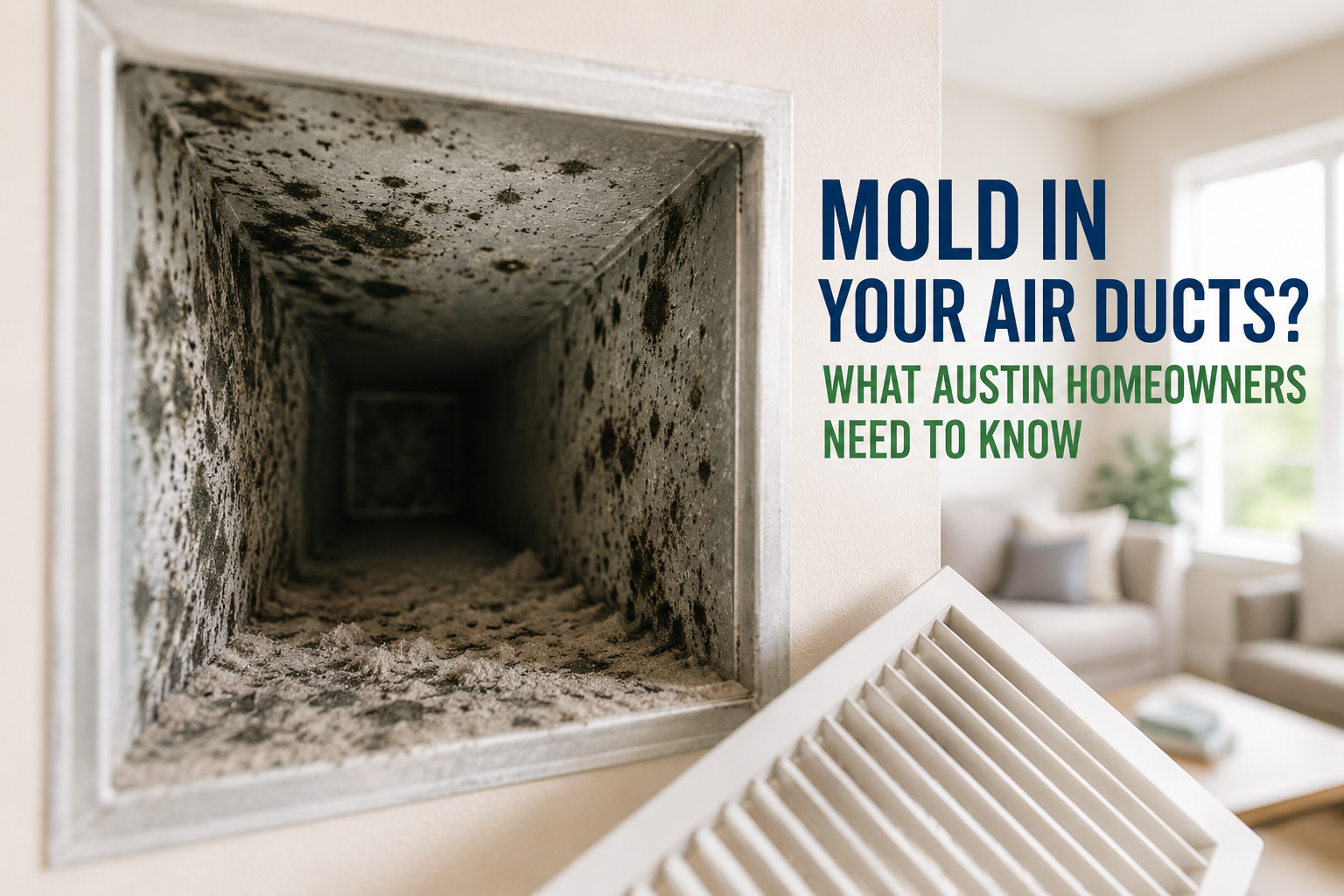
If your home has a musty smell every time the HVAC system runs, mold could be hiding inside your air ducts. Many Austin homeowners assume mold is only a problem in bathrooms, kitchens, or areas with visible water damage. However, air ducts can create the perfect environment for mold growth when moisture, dust, and organic debris combine inside the system. Once mold in your air ducts begins growing, your HVAC system can circulate spores throughout your home every time it turns on.
Understanding the warning signs and knowing when to take action can help protect your family’s health, improve indoor air quality, and prevent costly damage.
Can Mold Really Grow Inside Air Ducts?
Yes. Mold can grow inside air ducts when moisture becomes trapped within the HVAC system.
Austin’s humid climate creates ideal conditions for mold development. Condensation around cooling coils, improperly insulated ductwork, roof leaks, plumbing leaks, and excess indoor humidity can all introduce moisture into your air distribution system.
When mold spores encounter moisture and a food source such as dust, dirt, pet dander, or other organic particles inside ductwork, colonies can begin forming and spreading.
Featured Snippet Answer
Mold can grow inside air ducts when moisture accumulates in the HVAC system. Common causes include condensation, humidity, water leaks, and poor ventilation. Signs of mold in air ducts include musty odors, worsening allergy symptoms, visible mold near vents, and excessive dust buildup. Professional inspection and cleaning are typically required to identify and remove contamination safely.
Why Mold in Air Ducts Is a Serious Concern
The biggest concern with mold inside ductwork is that your HVAC system can distribute mold spores throughout the entire home.
This exposure may contribute to:
- Allergy symptoms
- Nasal congestion
- Persistent coughing
- Eye irritation
- Headaches
- Asthma flare-ups
- Respiratory discomfort
Children, older adults, and individuals with respiratory conditions are often more sensitive to airborne contaminants.
According to the U.S. Environmental Protection Agency, controlling moisture is the most effective way to prevent mold growth indoors.
Common Signs Mold May Be Growing in Your Air Ducts
A Persistent Musty Odor
One of the most common warning signs is a damp, earthy smell that becomes stronger when the heating or cooling system is operating.
If the odor disappears when the HVAC system is turned off and returns when airflow resumes, mold inside the duct system may be contributing to the problem.
Increased Allergy Symptoms Indoors
Many homeowners notice that sneezing, coughing, congestion, itchy eyes, or respiratory irritation seem worse while spending time inside the home.
When mold spores circulate through ductwork, indoor air quality can decline significantly.
Visible Mold Around Air Vents
While mold growth inside ducts is often hidden, you may notice discoloration, black spots, or fuzzy growth around supply vents, return vents, or nearby ceiling and wall surfaces.
Visible growth near vents warrants immediate inspection.
Recent Water Damage
Roof leaks, plumbing leaks, flooding, or HVAC condensation issues increase the likelihood of mold growth inside the duct system.
Even small leaks can create enough moisture for mold colonies to develop over time.
Excessive Humidity Inside the Home
Austin homeowners frequently battle high humidity levels. When indoor humidity remains elevated, moisture can accumulate inside ductwork and HVAC components.
Why Austin Homes Are Especially Vulnerable
Austin’s climate presents unique challenges for homeowners.
Long cooling seasons mean air conditioning systems operate for much of the year. Temperature differences between conditioned air and warm outdoor air can create condensation inside HVAC systems.
Homes with older ductwork, inadequate insulation, poor attic ventilation, or neglected HVAC maintenance may face an even greater risk of mold development.
Regular inspections and preventative maintenance help reduce these risks before they become major problems.
How Professionals Identify Mold in Air Ducts
Because mold can resemble dirt, dust, or staining, visual inspection alone is not always enough.
Professional technicians evaluate:
- Duct interiors
- HVAC components
- Cooling coils
- Air handlers
- Vent registers
- Moisture sources
- Airflow performance
In some cases, homeowners may also benefit from professional Indoor Air Quality Testing in Austin to identify airborne contaminants and assess overall air quality conditions.
What Happens During Professional Air Duct Cleaning?
If contamination is found, professional cleaning removes accumulated dust, debris, and potential mold growth from the HVAC system.
Andrew & Sons provides comprehensive Air Duct Cleaning Services in Austin designed to help improve airflow and indoor air quality.
Professional cleaning helps:
- Remove contaminants from ductwork
- Improve HVAC efficiency
- Reduce airborne dust
- Support healthier indoor air
- Eliminate sources of unpleasant odors
Many homeowners also combine duct cleaning with UV Light Installation Services to help reduce microbial growth within HVAC systems.
Preventing Mold Growth in Air Ducts
The best defense against mold is controlling moisture.
Homeowners can reduce risk by maintaining indoor humidity levels below 60 percent, replacing HVAC filters regularly, repairing leaks promptly, scheduling routine HVAC maintenance, and ensuring ductwork remains properly insulated.
Routine inspections can identify small problems before they develop into larger indoor air quality concerns.
For additional insight into maintaining cleaner indoor air, read our guide on Why You Need Air Duct Cleaning in Austin.
When Should You Schedule an Inspection?
If you notice musty odors, recurring allergy symptoms, visible mold near vents, recent water damage, or declining indoor air quality, it may be time for a professional evaluation.
Early detection can help prevent widespread contamination and protect both your HVAC investment and your family’s comfort.
Trust Andrew & Sons for Cleaner, Healthier Air
Mold inside air ducts is not always visible, but the effects can be felt throughout your home. If you suspect mold growth, unusual odors, or declining indoor air quality, the team at Andrew & Sons can help identify potential issues and recommend effective solutions.
Whether you need professional duct cleaning, indoor air quality testing, insulation services, or UV light installation, our experienced team is committed to helping Austin homeowners breathe easier.
Schedule your inspection today through our online appointment page or contact us to learn more.
Frequently Asked Questions
Can mold in air ducts make you sick?
Mold exposure may contribute to allergy symptoms, respiratory irritation, coughing, sneezing, and asthma flare-ups in sensitive individuals.
What does mold in air ducts smell like?
Most homeowners describe it as a musty, damp, earthy, or mildew-like odor that becomes stronger when the HVAC system is running.
Is mold in air ducts common in Austin?
Austin’s humidity and long cooling season can create favorable conditions for moisture buildup within HVAC systems, increasing mold risk.
How can I tell if mold is inside my ductwork?
Common indicators include musty odors, worsening indoor allergies, visible mold near vents, recent water damage, and excessive humidity.
Can replacing air filters remove mold?
Air filters help capture airborne particles but do not eliminate existing mold colonies growing within ductwork or HVAC components.
Should I clean mold from air ducts myself?
Professional inspection and cleaning are recommended because mold contamination can spread if handled improperly.
How often should air ducts be inspected?
Most homeowners benefit from periodic inspections, especially after water damage, remodeling projects, or indoor air quality concerns.
Can UV lights help prevent mold growth?
UV light systems installed within HVAC equipment may help reduce microbial growth on certain system components.
Does duct cleaning remove mold permanently?
Cleaning removes contamination, but long-term prevention depends on correcting moisture problems that allow mold to grow.
What causes moisture inside air ducts?
Common causes include condensation, high humidity, poor insulation, roof leaks, plumbing leaks, and HVAC drainage issues.