
Air duct cleaning in Dripping Springs is not something I recommend just because a home has been around for a few years. I want to know what is actually inside the ductwork first.
If you are seeing more dust around the house, finding debris near the vents, dealing with a musty smell, or wondering why your system seems to be moving more dirt than it used to, there is a better place to start than guessing.
Look inside.
That is how I approach every job.
What I Look At Before I Clean Anything
When I walk into a home, I want to know why the homeowner called.
Maybe they just finished a remodel.
Maybe they have pets and are constantly cleaning hair and dust.
Maybe the house is newer and they assumed the ductwork would be clean because nobody had lived there very long.
Maybe the system has simply been running for years without anyone opening it up.
Those details change what I am looking for.
I also look at the condition of the returns, supply vents, accessible ductwork, filter and other parts of the system. If there is a reason to clean it, I will show you what I am seeing.
If there is not, I will tell you that too.
That is how I have run Andrew & Sons for more than 25 years. I would rather lose a cleaning job than charge someone for work their house does not need. The company is family owned, and my name is on the truck and the work.
A New House Does Not Always Mean Clean Ducts
This catches a lot of homeowners by surprise.
We have cleaned newer homes in Central Texas where the homeowners were already dealing with dust shortly after moving in.
One real example was a home in Teravista in Round Rock.
The family had just moved in and kept dusting surfaces that seemed to get dirty again almost immediately. When we opened the returns, we found fine construction dust coating the ductwork.
That makes sense when you think about how a house is built.
Ductwork is installed while other trades are still working. Drywall is cut and sanded. Cabinets go in. Flooring is installed. Trim is cut. Dust gets created while the duct system is already in the house.
If that material gets into the open ductwork, the fact that the house is new does not make it disappear.
We cleaned the system, sanitized it and replaced the filters. That is the kind of situation where cleaning has a clear reason behind it.
If you have recently bought a new home or finished construction in Dripping Springs, this is one of the first things I would want to know.
What I Look For Inside Return Vents
The return side gets a lot of attention because that is where air from the home is pulled back toward the system.
Take the grille off and you may see some dust. That alone does not mean you need the whole duct system cleaned.
What I care about is what is happening farther into the system.
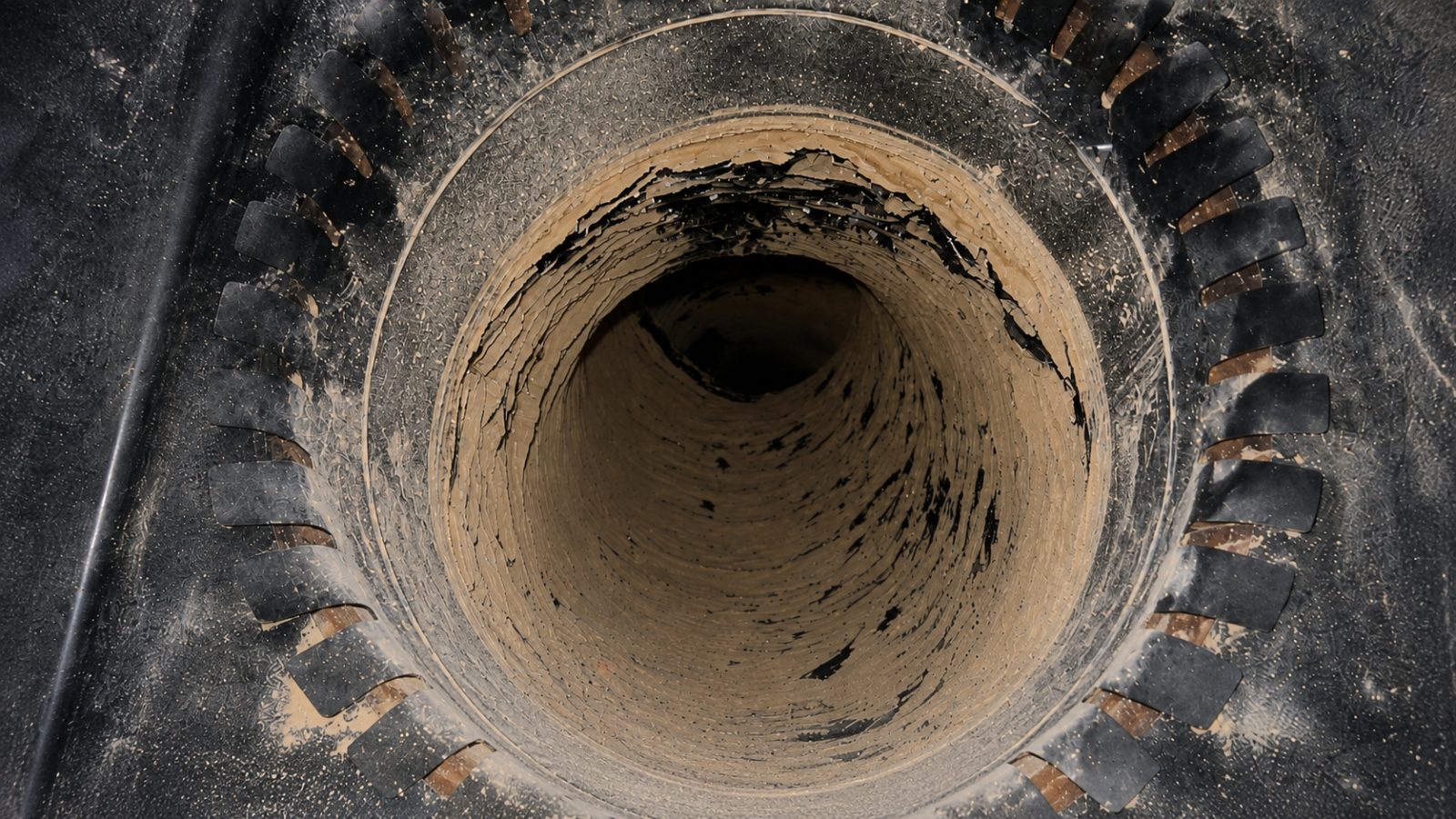
Is there a heavy layer of dust?
Is there pet hair?
Is there construction debris?
Is there evidence of moisture?
Is material actually getting into the home through the supply side?
Those are better questions than simply asking how many years it has been since the last cleaning.
A dusty return grille is normal. A duct system packed with debris is a different situation.
The EPA also makes this distinction. It does not recommend routine duct cleaning for every home. It recommends considering cleaning when there is substantial contamination, visible mold in appropriate areas, vermin infestation, or excessive dust and debris that is actually being released into the home.
What Pet Hair Can Tell You
Pet hair is one of those things homeowners notice before they ever think about the ductwork.
If you have two dogs, a cat, or several pets in the house, you already know how quickly hair and dander can build up.
You vacuum the floors.
You clean the furniture.
You change the filter.
But some of that material can still make its way toward the return system.
If you are finding hair around return vents or the filter is loading up quickly, I want to see what is happening before I tell you that the ducts need cleaning.
We have a separate guide on pet hair in vents and what to do about it that goes into this problem in more detail.
The important thing is not to assume that pet hair automatically means you need a duct cleaning. Let the condition of the system make that decision.
A Musty Smell Is a Different Conversation
If you smell something unusual when the system starts, tell the technician.
Do not simply ask for the ducts to be sprayed.
Moisture changes the situation.
The EPA points out that moisture is a major factor in biological growth inside HVAC systems. If mold is actually present, the moisture problem has to be addressed or the problem can come back. Wet or moldy fiberglass duct material may also need to be replaced rather than simply cleaned.
There is another important point here.
If somebody tells you that you have mold, ask them to show you what they found.
A dark spot in a duct is not automatically proof of mold. The EPA recommends appropriate confirmation when necessary because something that looks like mold is not necessarily mold.
That is why I do not like scare tactics.
Show the homeowner what you found.
Explain what it means.
Then explain what needs to happen next.
What About the Supply Vents?
The supply side is where conditioned air comes back into your rooms.
If the ductwork is carrying heavy dust and debris, you may eventually see signs around the registers.
But again, I am not looking at one dirty vent and declaring the whole system contaminated.
I want to see the bigger picture.
If the system needs cleaning, the goal is to clean the accessible supply and return ductwork properly rather than just making the registers look nice.
Our air duct cleaning service covers the Central Texas homes where we inspect the system, clean the ductwork and show the homeowner what came out.
That last part matters.
You should not have to take a cleaner’s word for everything.
What You Should See From a Professional Cleaning
The equipment matters, but so does the process.
The EPA recommends that duct cleaning providers inspect the system, gain appropriate access to the ductwork and components, use suitable vacuum equipment, protect the home, and take care not to damage the duct system.
At Andrew & Sons, the routine starts before the vacuum is running.
We protect the home.
We open the system.
We clean the ductwork.
We sanitize the appropriate areas.
Then we show you what came out.
That is part of the reason our work gallery focuses on actual jobs instead of stock photographs. You can see the kind of work we do across Central Texas.
Do Not Forget the Dryer Vent
There is another service I want Dripping Springs homeowners to think about while they are looking at the air in their home.
The dryer vent.
It is not part of your air duct system, but it is another place where restricted airflow can become a real household problem.
One of our Round Rock jobs involved a homeowner whose dryer was running hot and leaving clothes damp after a full cycle. We found heavy lint buildup running through the vent line all the way toward the roof outlet.
We cleared the line, cleaned the roof outlet and checked the airflow.
That is a much better example of why dryer vent cleaning matters than simply saying, “You should clean your dryer vent once a year.”
If your dryer is taking longer to dry clothes, running unusually hot, or you are seeing lint collecting around the outside vent, have the vent checked.
You can learn more about dryer vent cleaning and what we look for when we clean the full vent line.
Should You Clean Your Air Ducts Every Few Years?
There is no magic number that applies to every house.
Some Central Texas homes need attention sooner because of construction, pets, heavy dust or the condition of the system.
Others do not.
Our Austin service page currently recommends a three to five year range for many Central Texas homes, while also noting that pets, allergies and recent remodeling can change that timing. More importantly, Andrew’s own policy is that if the system does not need cleaning yet, the customer is told so.
I would not book a cleaning just because somebody told you that every house needs one every year.
Look at the system first.
When I Would Tell You Not to Clean the Ducts
This is something people do not expect a duct cleaning company to say.
If your ducts were cleaned recently, look good and are not showing signs of significant contamination, you may not need another cleaning.
If the real problem is damaged or disconnected ductwork, cleaning will not fix it.
If there is a moisture problem, cleaning without fixing the moisture source is not enough.
If someone is trying to sell you a chemical treatment without being able to explain exactly why it is needed, ask questions before agreeing.
The EPA specifically advises homeowners to be cautious about broad claims concerning health benefits and routine duct cleaning.
That is good advice.
You should know what you are paying for.
Why Dripping Springs Homeowners Should Ask More Questions
Dripping Springs homes are not all the same.
You have newer construction, older properties, remodels, homes with pets and homes where the HVAC system has been working hard for years.
So when somebody gives you a flat answer before seeing your system, I would be cautious.
Ask them what they found.
Ask them to show you.
Ask what parts of the system they will clean.
Ask whether they found actual contamination or whether they are simply recommending routine service.
And ask what happens if they inspect the system and it does not need cleaning.
A good answer should not make you feel pressured.
The Bottom Line From Andrew
If you live in Dripping Springs and you are considering air duct cleaning, do not start with the question, “How often should I have this done?”
Start with:
“Can you show me what is inside my system?”
That is the question I would want answered if it were my house.
If the ductwork has substantial dust, construction debris, pet hair or another condition that makes cleaning worthwhile, we will explain what we found and what we recommend.
If it does not need cleaning yet, we will tell you that too.
And if the bigger problem is somewhere else, such as moisture, damaged ductwork or a blocked dryer vent, that is what you need to know.
That is how I believe this work should be done.
Look first.
Explain what you find.
Do the work that is actually needed.
Then show the homeowner the result.
Frequently Asked Questions About Air Duct Cleaning in Dripping Springs
Does every home in Dripping Springs need air duct cleaning?
No. Air ducts do not need to be cleaned simply because a certain number of years have passed. The condition of the ductwork should determine whether cleaning makes sense.
How do I know if my air ducts need cleaning?
Look for substantial dust or debris inside the ductwork, debris coming from supply registers, evidence of contamination, pest activity, or other conditions that justify an inspection. A dusty vent cover by itself does not prove that the entire system needs cleaning.
How often should air ducts be cleaned?
There is no universal schedule. Many Central Texas homes may fall within a three to five year range, but remodeling, pets, dust and the condition of the system can change that. Andrew & Sons recommends looking at the actual condition of the system rather than selling a fixed schedule.
Can construction dust get into the air ducts of a new home?
Yes. Ductwork can be installed while drywall, flooring, cabinets and other construction work is still taking place. Andrew & Sons has found fine construction dust inside newer Central Texas homes, including a real Teravista job in Round Rock.
Can pet hair get inside air ducts?
Yes. Hair, dander and other household debris can move toward the return side of an HVAC system. The amount that accumulates depends on the home, filtration and other factors. An inspection is the best way to determine whether the ductwork itself needs cleaning.
Does a musty smell mean my air ducts have mold?
Not necessarily. A musty smell can have several causes. If mold is suspected, the source of moisture needs attention, and a substance that merely looks like mold should not automatically be treated as confirmed mold.
Can air duct cleaning improve indoor air quality?
Cleaning can remove accumulated material when the duct system is substantially contaminated, but it should not be sold as a guaranteed treatment for allergies, illness or every indoor air quality problem. The EPA says research has not established that routine duct cleaning prevents health problems.
Should dryer vent cleaning be done separately from air duct cleaning?
Yes. The dryer vent is a separate system. It should be inspected when clothes are taking longer to dry, the dryer is running unusually hot, or lint is accumulating around the exterior vent.
What should an air duct cleaning company show me?
Ask the company to show you the contamination that justifies cleaning, explain what parts of the system will be cleaned, and explain how the home and ductwork will be protected during the job. The EPA specifically recommends asking providers to demonstrate the contamination they say requires cleaning.
What if my ducts do not need cleaning?
A reputable company should tell you. Andrew & Sons specifically states that if the ducts were cleaned recently and do not need another cleaning yet, the company will say so.
Want Andrew to Look at Your Ductwork?
If you are in Dripping Springs and you are seeing unusual dust, dealing with a recent remodel, have pets, or simply want to know what is inside your duct system, talk to Andrew & Sons ADC.
You get an on site assessment, upfront pricing and a straight answer about whether the work is actually needed.
If your ducts need cleaning, we will clean them.
If they do not, we will tell you.
And if the real problem is your dryer vent or another part of the system, we will tell you that too.
Schedule an appointment with Andrew & Sons ADC and find out what your system actually needs.